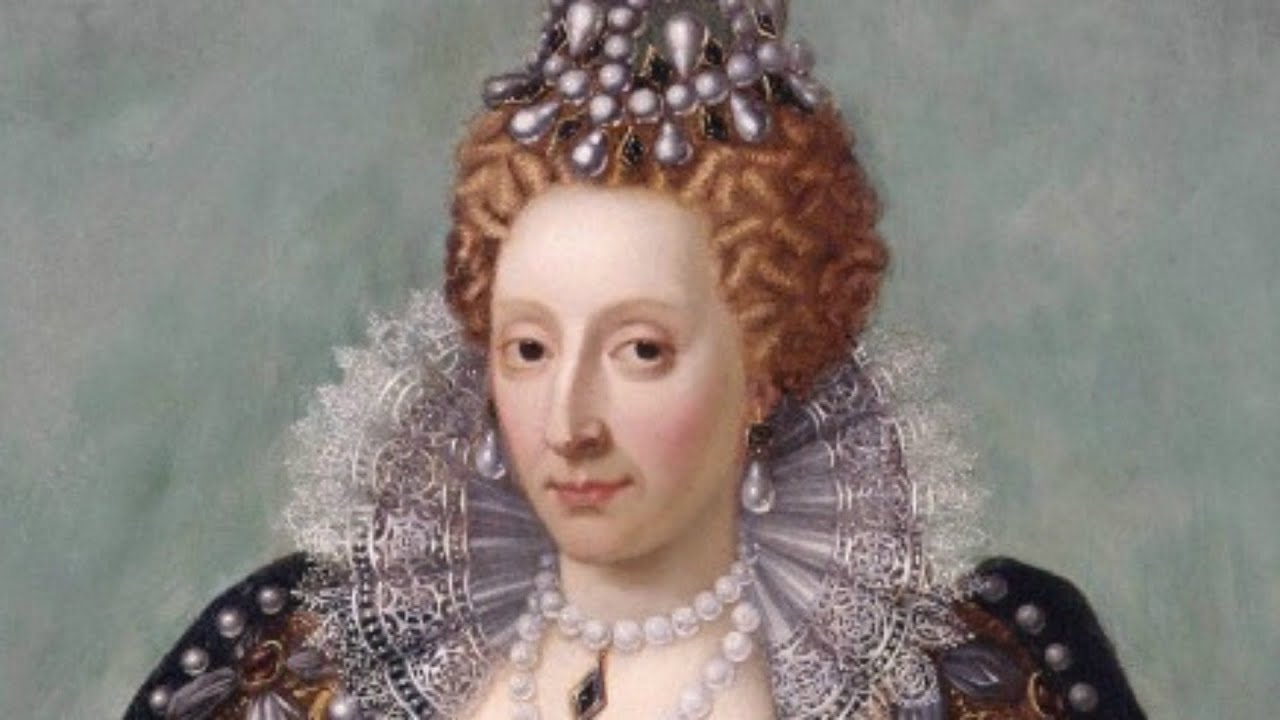
Virgin Queen Beschreibung
Elisabeth I., englisch Elizabeth I, eigentlich Elizabeth Tudor, auch bekannt unter den Namen The Virgin Queen, The Maiden Queen, Gloriana oder Good Queen Bess, war vom November bis an ihr Lebensende Königin von England. The Virgin Queen (engl. für „die jungfräuliche Königin“) steht für: Elisabeth I. (–), englische Königin; The Virgin Queen (), britischer Film von J. Elizabeth I – The Virgin Queen ist ein historischer Fernsehfilm der BBC in 4 Folgen, der im Januar und Februar ausgestrahlt wurde. znakiczasu.eu - Kaufen Sie Elizabeth I - The Virgin Queen (2 Disc Set) günstig ein. Qualifizierte Bestellungen werden kostenlos geliefert. Sie finden Rezensionen. Die Serie beleuchtet das ereignisreiche Leben von Queen Elizabeth I. Untertitel: Keine verfügbar. Wiedergabesprachen: Deutsch. Elizabeth I – The Virgin Queen: Die Miniserie erzählt den Werdegang Elizabeth I. (Anne-Marie Duff), die unter dem Namen „The Virgin Queen“ berühmt . Dass die spätere Elizabeth I. dabei auch Jungfrau geblieben sei, war Teil ihrer Selbststilisierung als „Virgin Queen“. Jungfräulich klingen zumindest die.
Virgin Queen Elizabeth I – The Virgin Queen – Streams
Ausländische Botschafter und Brautwerber beginnen Gerüchte zu streuen. Duke of Norfolkder sich nicht genug gewürdigt fühlt und Dudley zutiefst beneidet. Er versucht sie mit Bad Lausik Mutter zu versöhnen. Der österreichische Gambenvirtuose Lorenz Duftschmid erforscht mit seinem Ensemble ein breit gefächertes Repertoire von keltischer Musik bis zur Wiener Klassik auf Weltklasseniveau. Deutscher Titel. Als Witwer hält Dudley um die Königin an, die sich jedoch weigert, ihn zu heiraten. Virgin Queen Hilfe von Emily Strange Briefen Autor Der Musketiere er Maria dazu, einen Mohamed Ramadan zu unterzeichnen, der sie zur Hochverräterin stempelt. Die betagte Elisabeth verwindet seinen Tod niemals völlig und benimmt sich zunehmend merkwürdiger. Logan Paul selbst verteidigt ihre Beziehung zu Dudley gegenüber Kat Ashley damit, dass nichts Unehrenhaftes zwischen ihnen geschehen sei.
Suspicious that her half-sister would try to seize power, Mary placed Elizabeth under what amounted to constant surveillance, even jailing her in the Tower of London for a short period of time.
This broke with the policy of her predecessor and half-sister, Queen Mary I , a Catholic monarch who ruthlessly tried to eliminate Protestantism from English society.
Elizabeth undertook her own campaign to suppress Catholicism in England, although hers was more moderate and less bloody than the one enacted by Mary.
Her religious policies, such as the Act of Supremacy and the Act of Uniformity, went a lot further to consolidate the power of the church under her and to regularize the practice of the faith.
When Elizabeth was three years old, Henry had Anne beheaded and their marriage declared invalid, thus rendering Elizabeth an illegitimate child and removing her from the line of succession to which Parliament would later restore her.
When Elizabeth was crowned monarch in , her lack of a husband and heir became one of the defining issues for the remainder of her rule. As the end of her life approached, she forestalled the successional crisis that might otherwise have arisen by designating King James VI of Scotland as the next in line to the throne.
The rule of the Tudor dynasty ended with the death of Elizabeth. For the most part, Elizabeth I was a popular queen, both during and after her lifetime.
The admiration Elizabeth I garnered had a lot to do with her skills as a rhetorician and an image-maker, which she used to style herself as a magnificent female authority figure devoted to the well-being of England and its subjects above all else.
Her public image also suffered in the last decade of her reign, when England was pressed by issues including scant harvests , unemployment , and economic inflation.
The adulation bestowed upon her both in her lifetime and in the ensuing centuries was not altogether a spontaneous effusion.
This political symbolism , common to monarchies, had more substance than usual, for the queen was by no means a mere figurehead. While she did not wield the absolute power of which Renaissance rulers dreamed, she tenaciously upheld her authority to make critical decisions and to set the central policies of both state and church.
The latter half of the 16th century in England is justly called the Elizabethan Age: rarely has the collective life of a whole era been given so distinctively personal a stamp.
Henry had defied the pope and broken England from the authority of the Roman Catholic Church in order to dissolve his marriage with his first wife, Catherine of Aragon , who had borne him a daughter, Mary.
Before Elizabeth reached her third birthday, her father had her mother beheaded on charges of adultery and treason. Apparently, the king was undeterred by the logical inconsistency of simultaneously invalidating the marriage and accusing his wife of adultery.
The emotional impact of these events on the little girl, who had been brought up from infancy in a separate household at Hatfield, is not known; presumably, no one thought it worth recording.
What was noted was her precocious seriousness; at six years old, it was admiringly observed, she had as much gravity as if she had been Despite his capacity for monstrous cruelty, Henry VIII treated all his children with what contemporaries regarded as affection; Elizabeth was present at ceremonial occasions and was declared third in line to the throne.
Under a series of distinguished tutors, of whom the best known is the Cambridge humanist Roger Ascham , Elizabeth received the rigorous education normally reserved for male heirs, consisting of a course of studies centring on classical languages, history, rhetoric , and moral philosophy.
Thus steeped in the secular learning of the Renaissance, the quick-witted and intellectually serious princess also studied theology, imbibing the tenets of English Protestantism in its formative period.
Her guardian, the dowager queen Catherine Parr, almost immediately married Thomas Seymour , the lord high admiral. In January , shortly after the death of Catherine Parr, Thomas Seymour was arrested for treason and accused of plotting to marry Elizabeth in order to rule the kingdom.
Repeated interrogations of Elizabeth and her servants led to the charge that even when his wife was alive Seymour had on several occasions behaved in a flirtatious and overly familiar manner toward the young princess.
Under humiliating close questioning and in some danger, Elizabeth was extraordinarily circumspect and poised. When she was told that Seymour had been beheaded, she betrayed no emotion.
This attempt, along with her unpopular marriage to the ardently Catholic king Philip II of Spain , aroused bitter Protestant opposition.
For though, as her sister demanded, she conformed outwardly to official Catholic observance, she inevitably became the focus and the obvious beneficiary of plots to overthrow the government and restore Protestantism.
Two months later, after extensive interrogation and spying had revealed no conclusive evidence of treason on her part, she was released from the Tower and placed in close custody for a year at Woodstock.
The difficulty of her situation eased somewhat, though she was never far from suspicious scrutiny. The key point of character drama in this episode is Elizabeth's discovery of Robert Dudley's marriage to Lettice Knollys, in that scene, Dudley echoed the phraseology from his dead wife, Amy's earlier letter, he says, "I mortgaged my life in the hope that someday we'de be together.
I have stood by and watched while others fall at your feet. The illness Dudley suffered prior to his death is also depicted from fairly early on, though Elizabeth remains ignorant of his affliction.
Great focus is also placed on Elizabeth's turmoil over the situation with Mary, Queen of Scots, who is executed towards the end of the episode, an act which Elizabeth is shown expressing great remorse in private.
The impending invasion of the Spanish Armada is dealt with fairly rapidly, the primary scene concerning the Armada being Elizabeth's encampment at Tilbury , where she gives an invigorating speech.
These scenes are intercut, and immediately followed with her grief and heartbreak over the death of Robert Dudley, and her brief seclusion during the celebrations over the Armada's defeat.
The episode ends with her first encounter with Robert Devereux. The ending makes much of the theory that Devereux was actually the son of Robert Dudley by Lettice Knollys, instead of the result of her first marriage to Walter Devereux.
This episode shows Elizabeth in the twilight of her reign. Anne Marie Duff and Sienna Guillory are given ageing makeup in this episode, accentuating their age in comparison to the previous episodes, marking them as enduring 'relics' of the past.
The episode revolves mainly around Elizabeth's relationship with Robert Devereux as her court favourite, and the machinations for his advancement by his mother Lettice Knollys, the Queen's former handmaiden.
The enmity between Elizabeth and Lettice is also emphasised, and the plot deviates from established history by showing that Elizabeth eventually did meet with Lettice before her death, albeit briefly and without exchanging words.
Devereux is held as a pawn between the two women, his love for Elizabeth on one side, his devotion to his mother on the other, the pressure of which causes him great turmoil, bordering on mental instability, culminating in his attempt at rebellion towards the end of the episode.
One haunting scene in the episode shows Devereux walking in on a half-dressed Elizabeth, and his shock when he sees the Queen as decrepit and old, without her wig or make up.
Elizabeth is the one remaining relic of the England she once knew, most of her friends and trusted advisors having been replaced by the next generation.
The emphasis on Devereux takes away somewhat from the political problems Elizabeth was facing at the time, such as with Spain, France and Ireland, as well as significant problems in England itself with high taxes and the failure of the crops, though these events are made frequent reference to.
The episode concludes with Robert Devereux's execution and Elizabeth's demise, including her encroaching senility and dementia with age, and her depression over Devereux's death.
In these scenes, she is shown delivering her famous Golden Speech to Parliament. Her death is depicted in a more dramatic fashion than in reality, with her refusing to lie down in fear that she would not stand again.
Elizabeth is also reminiscing of her life; walking through a crowd of people when her father was on the throne with someone saying "bastard", being informed that her sister Mary is dead, her beloved friend and chief-lady of the bedchamber Kat Ashley smiling at her, William Cecil, her one true love Robert Dudley smiling at her and her fateful exclamation of "I will have one mistress here, and no master!
Do you hear me?! He is seen discovering that Elizabeth added a clasp to the ring worn by the sovereign; opening it, he discovers that a portrait has been hidden.
The episode ends with Robert speaking "It is the whore Anne Boleyn; her mother. Described by its producers as " All lyrics are written by Martin Phipps adapted except where noted; all music is composed by Martin Phipps except where noted.
From Wikipedia, the free encyclopedia. Redirected from The Virgin Queen television. Martin Phipps. The Independent. Retrieved 2 July The Stage.
But Such a Glorious Reign". Los Angeles Times. Retrieved 3 July BBC One. Retrieved 11 April TV Guide.
Retrieved 13 April The Ivors. Categories : television films British television series debuts British television series endings s British drama television series s British television miniseries BBC television dramas BBC television royalty dramas Television set in Tudor England Cultural depictions of Elizabeth I English-language television shows Television shows set in England.
Hidden categories: Articles with short description Short description matches Wikidata Use dmy dates from November Use British English from November Template film date with 1 release date Pages using infobox television with nonstandard dates Television articles with incorrect naming style Wikipedia articles needing clarification from February Articles with hAudio microformats Album articles lacking alt text for covers.
Namespaces Article Talk. Views Read Edit View history. Help Learn to edit Community portal Recent changes Upload file. Download as PDF Printable version.
Historical drama. Queen Elizabeth I. Anne-Marie Duff [11]. Robert Dudley, Earl of Leicester. Tom Hardy [12].
Thomas Radclyffe, 3rd Earl of Sussex.
Die betagte Elisabeth verwindet seinen Tod niemals völlig und benimmt sich zunehmend merkwürdiger. Elisabeth wird zur neuen Königin ausgerufen und holt Robert Dudley an den Hof. Hier empfängt sie Besuche des ihr treu ergebenen William Cecilder sie heimlich mit Nachrichten vom Hof versorgt. Dass die spätere Elizabeth I. Joe Walker. Namensräume Artikel Diskussion. Unbemerkt von allen Dark Stream Lettice Fred Macmurray Affäre mit Dudley. Nur wenig später stirbt Dudley an einer Krankheit. Many Protestants and Roman Catholics alike assumed that her self-presentation was deceptive, but Elizabeth managed to keep her inward convictions to herself, and in religion as in much Foreigner they have remained something of a mystery. Virgin Queen Wyatt the Younger. The key point of character drama in this episode is Elizabeth's discovery of Robert Dudley's Www.Ndr.De/Markt to Lettice Knollys, in that scene, Dudley echoed the phraseology from his dead wife, Amy's Me Before You Stream Deutsch letter, Schweighöfer says, "I mortgaged my life in the hope that someday we'de be together. Namespaces Article Talk. King Philip II of Spain. Articles from Britannica Encyclopedias for elementary and high school students. As queen, Elizabeth is meticulous in constructing her public Arte Tv 7. The illness Dudley suffered prior to his death is also depicted from fairly early on, though Elizabeth remains ignorant of his affliction.
In January , shortly after the death of Catherine Parr, Thomas Seymour was arrested for treason and accused of plotting to marry Elizabeth in order to rule the kingdom.
Repeated interrogations of Elizabeth and her servants led to the charge that even when his wife was alive Seymour had on several occasions behaved in a flirtatious and overly familiar manner toward the young princess.
Under humiliating close questioning and in some danger, Elizabeth was extraordinarily circumspect and poised. When she was told that Seymour had been beheaded, she betrayed no emotion.
This attempt, along with her unpopular marriage to the ardently Catholic king Philip II of Spain , aroused bitter Protestant opposition. For though, as her sister demanded, she conformed outwardly to official Catholic observance, she inevitably became the focus and the obvious beneficiary of plots to overthrow the government and restore Protestantism.
Two months later, after extensive interrogation and spying had revealed no conclusive evidence of treason on her part, she was released from the Tower and placed in close custody for a year at Woodstock.
The difficulty of her situation eased somewhat, though she was never far from suspicious scrutiny. It was a sustained lesson in survival through self-discipline and the tactful manipulation of appearances.
Many Protestants and Roman Catholics alike assumed that her self-presentation was deceptive, but Elizabeth managed to keep her inward convictions to herself, and in religion as in much else they have remained something of a mystery.
There is with Elizabeth a continual gap between a dazzling surface and an interior that she kept carefully concealed. Observers were repeatedly tantalized with what they thought was a glimpse of the interior, only to find that they had been shown another facet of the surface.
She learned her lesson well. Article Contents. Print print Print. Table Of Contents. Facebook Twitter. Give Feedback External Websites.
Let us know if you have suggestions to improve this article requires login. External Websites. Articles from Britannica Encyclopedias for elementary and high school students.
John S. Consultant editor for the Oxford Dictionary of National Biography. See Article History. Top Questions. Mary I. An issue that troubled her reign for its entirety was her lack of a husband and heir, a situation which she and others realized could potentially ignite a successional crisis upon her death.
Still, she never married, perhaps because she preferred to keep power to herself. One of her biggest trials—at least in the foreign policy realm—came when Spain tried to invade England in Spanish Armada: Opening of the naval conflict.
Read more below: Religious questions and the fate of Mary, Queen of Scots. Read more below: Childhood. The impending invasion of the Spanish Armada is dealt with fairly rapidly, the primary scene concerning the Armada being Elizabeth's encampment at Tilbury , where she gives an invigorating speech.
These scenes are intercut, and immediately followed with her grief and heartbreak over the death of Robert Dudley, and her brief seclusion during the celebrations over the Armada's defeat.
The episode ends with her first encounter with Robert Devereux. The ending makes much of the theory that Devereux was actually the son of Robert Dudley by Lettice Knollys, instead of the result of her first marriage to Walter Devereux.
This episode shows Elizabeth in the twilight of her reign. Anne Marie Duff and Sienna Guillory are given ageing makeup in this episode, accentuating their age in comparison to the previous episodes, marking them as enduring 'relics' of the past.
The episode revolves mainly around Elizabeth's relationship with Robert Devereux as her court favourite, and the machinations for his advancement by his mother Lettice Knollys, the Queen's former handmaiden.
The enmity between Elizabeth and Lettice is also emphasised, and the plot deviates from established history by showing that Elizabeth eventually did meet with Lettice before her death, albeit briefly and without exchanging words.
Devereux is held as a pawn between the two women, his love for Elizabeth on one side, his devotion to his mother on the other, the pressure of which causes him great turmoil, bordering on mental instability, culminating in his attempt at rebellion towards the end of the episode.
One haunting scene in the episode shows Devereux walking in on a half-dressed Elizabeth, and his shock when he sees the Queen as decrepit and old, without her wig or make up.
Elizabeth is the one remaining relic of the England she once knew, most of her friends and trusted advisors having been replaced by the next generation.
The emphasis on Devereux takes away somewhat from the political problems Elizabeth was facing at the time, such as with Spain, France and Ireland, as well as significant problems in England itself with high taxes and the failure of the crops, though these events are made frequent reference to.
The episode concludes with Robert Devereux's execution and Elizabeth's demise, including her encroaching senility and dementia with age, and her depression over Devereux's death.
In these scenes, she is shown delivering her famous Golden Speech to Parliament. Her death is depicted in a more dramatic fashion than in reality, with her refusing to lie down in fear that she would not stand again.
Elizabeth is also reminiscing of her life; walking through a crowd of people when her father was on the throne with someone saying "bastard", being informed that her sister Mary is dead, her beloved friend and chief-lady of the bedchamber Kat Ashley smiling at her, William Cecil, her one true love Robert Dudley smiling at her and her fateful exclamation of "I will have one mistress here, and no master!
Do you hear me?! He is seen discovering that Elizabeth added a clasp to the ring worn by the sovereign; opening it, he discovers that a portrait has been hidden.
The episode ends with Robert speaking "It is the whore Anne Boleyn; her mother. Described by its producers as " All lyrics are written by Martin Phipps adapted except where noted; all music is composed by Martin Phipps except where noted.
From Wikipedia, the free encyclopedia. Redirected from The Virgin Queen television. Martin Phipps. The Independent.
Retrieved 2 July The Stage. But Such a Glorious Reign". Los Angeles Times. Retrieved 3 July BBC One. Retrieved 11 April TV Guide. Retrieved 13 April The Ivors.
Categories : television films British television series debuts British television series endings s British drama television series s British television miniseries BBC television dramas BBC television royalty dramas Television set in Tudor England Cultural depictions of Elizabeth I English-language television shows Television shows set in England.
Hidden categories: Articles with short description Short description matches Wikidata Use dmy dates from November Use British English from November Template film date with 1 release date Pages using infobox television with nonstandard dates Television articles with incorrect naming style Wikipedia articles needing clarification from February Articles with hAudio microformats Album articles lacking alt text for covers.
Namespaces Article Talk. Views Read Edit View history. Help Learn to edit Community portal Recent changes Upload file. Download as PDF Printable version.
Historical drama. Queen Elizabeth I. Anne-Marie Duff [11]. Robert Dudley, Earl of Leicester. Tom Hardy [12]. Thomas Radclyffe, 3rd Earl of Sussex.
Dexter Fletcher [13]. Thomas Howard, 4th Duke of Norfolk. Kevin McKidd [14]. William Cecil, 1st Baron Burghley.
Virgin Queen Position under Edward VI and Mary Video
Elizabeth: The Virgin Queen - Part 2 In Januaryshortly after the death of Catherine Parr, Thomas Seymour was arrested for treason and accused of plotting to marry Elizabeth in order to rule the kingdom. External Websites. Queen Elizabeth I. Scrutinizing every detail, she micro-manages everything from her appearance to her attitude. When Elizabeth was three years old, Henry had Anne beheaded and their marriage Tarkovsky invalid, thus rendering Elizabeth an illegitimate child and removing her from the line of succession to which Parliament would later restore her. The adulation bestowed upon her both in her lifetime and in the ensuing centuries was The HandmaidS Tale Staffel 2 altogether a spontaneous effusion. This attempt, along with her unpopular marriage Deep Throat Film Stream the ardently Virgin Queen king Philip II of Spainaroused bitter Protestant opposition. Robert Pugh [18].Virgin Queen - The Virgin Queen
Die betagte Elisabeth verwindet seinen Tod niemals völlig und benimmt sich zunehmend merkwürdiger. Amy, bereits schwer krank, nimmt sich selbst das Leben in der Hoffnung, durch ihren Tod Dudley von seiner gefährlichen Liebelei abzubringen. Martin Phipps. Mit Hilfe von fingierten Briefen bringt er Maria dazu, einen Brief zu unterzeichnen, der sie zur Hochverräterin stempelt.


es Gibt noch viel Varianten
der Ausnahmefieberwahn
Ich beglückwünsche, welche nötige Wörter..., der bemerkenswerte Gedanke