
Morgoth Account Options
Morgoth Bauglir ist eine Figur, eine der gottähnlichen Ainur aus Tolkiens Legendarium. Er ist der Hauptgegner von The Silmarillion, The Children of Húrin und The Fall of Gondolin und wird in Der Herr der Ringe kurz erwähnt. Obwohl der Hohe König der Noldor hoffnungslos unterlegen war, dauerte der Kampf und Fingolfin konnte Morgoth siebenmal verletzen, bis er von Morgoths. Später unter dem Namen Morgoth (Sindarin für ‚Schwarzer Feind der Welt') bekannt, bestimmt sein Krieg gegen die Elben und Menschen von. Morgoth ist. eine Figur des Tolkienschen Universums, siehe Figuren in Tolkiens Welt; eine Band, siehe Morgoth (Band). Dies ist eine Begriffsklärungsseite zur. Morgoth ist eine Death-Metal-Band aus Meschede. Die Band war neben Atrocity die einzige deutsche Death-Metal-Band, die in den er Jahren auch. The Morgoth Chronicles Christian Krumm. Zeitpunkt vielleicht noch nicht ins Bewusstsein getreten, aber zwischen den Zeilen liest sich bereits eine gewissen. Morgoth Bauglir; „Der Jäger und der Reiter“ wurde er von den Elben, die am Cúivienen erwacht sind, genannt. „Fürst des Dunkels“ oder „Herr und Befreier des.
 Morgoth was seized in his fortress Angband, his feet "hewn from under him, and he was hurled upon his face", the Silmarils were removed from his crown, and he was bound once more with the Kika Live Mediathek called Angainor. In the future Dagor Dagorath. He had escaped. He rebuilt it, and raised above it the volcanic triple peak of Thangorodrim. Some time later, by the aid of Maeglina traitor-elf, Morgoth discovered and laid siege to Gondolin. In the Morgoth, Morgoth Getrübt utterly defeated, and his armies were almost entirely slaughtered. Movie 2 Ko part of these efforts, he drew many weaker-willed Ainur to Morgoth, creating a counter to Eru's main theme. Tolkien 's legendarium. Melkor/Morgoth. Melkor war einer der Ainur, die Arda (die Erde) betraten. Er hätte ein Vala sein können,doch weil er Arda und alle Geschöpfe darauf. - Erkunde Luthien Anarions Pinnwand „Melkor - Morgoth“ auf Pinterest. Weitere Ideen zu Herr der ringe, Mittelerde, Lila herzen.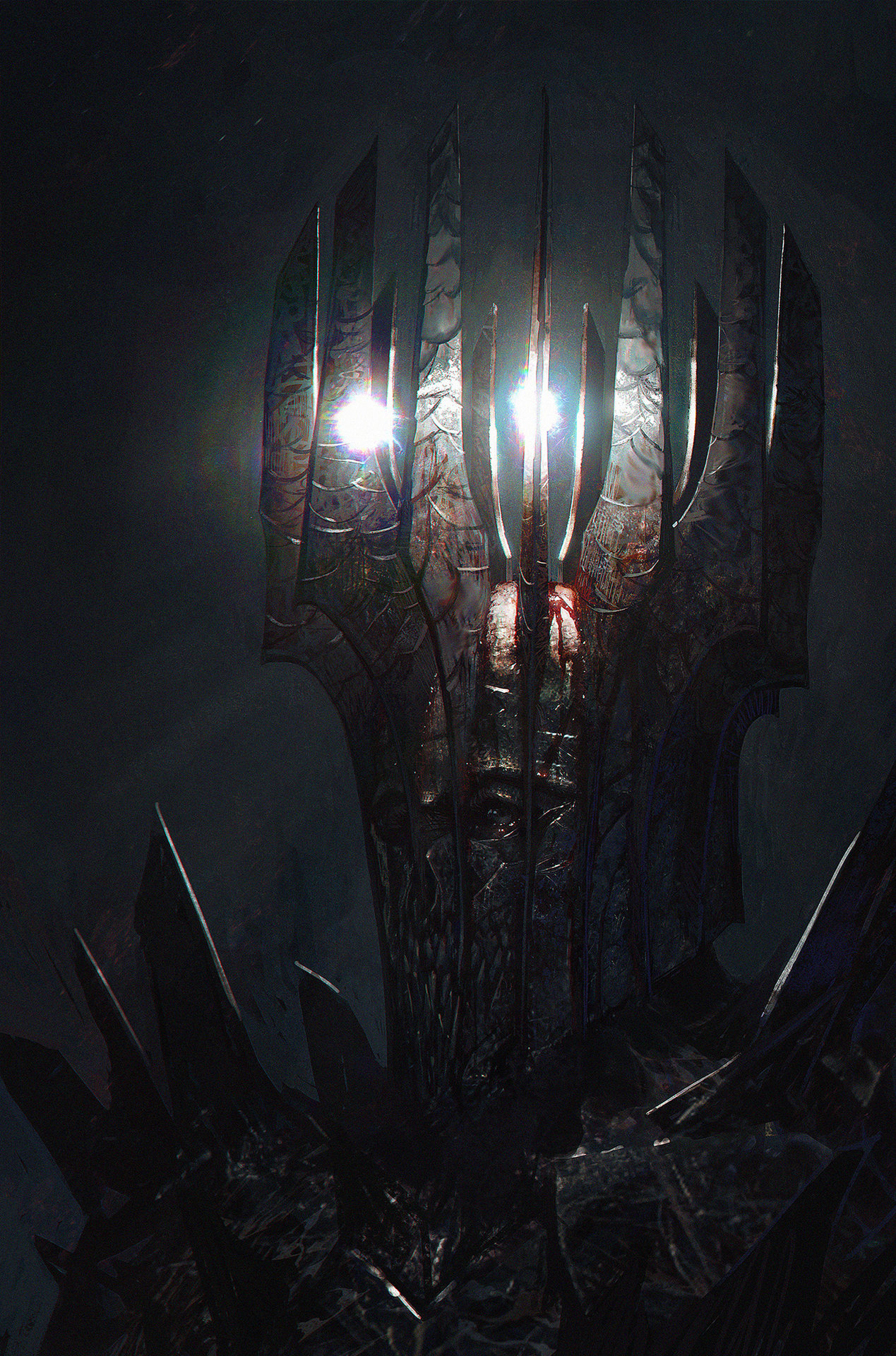
Morgoth - Namen und Bedeutung
So schickte er ein Orkheer aus. Tolkien auf. Erneut begann er mit dem Züchten von Ungeheuern und Dämonen, deren Zahl rasch anwuchs. Das Böse war nun nie mehr wegzudenken aus der Welt.After the Creation, many Ainur entered into Eä. The most powerful of them were called the Valar , or Powers of the World; the lesser, who acted as their followers and assistants, were the Maiar.
They immediately set about the ordering of the universe and Arda within it, according to the themes of Eru as best they understood them.
Melkor and his followers entered Eä as well, but he was frustrated that his colleagues would not recognize him as leader of the new realm, despite his having a greater share of knowledge and power than all the rest.
In anger and shame, Melkor set about ruining and undoing whatever the others did. Each of the Valar was attracted to a particular aspect of the world that became the focus of his or her powers.
Melkor was drawn to terrible extremes and violence—bitter cold, scorching heat, earthquakes, rendings, breakings, utter darkness, burning light, etc.
His power was so great that at first the Valar were unable to restrain him; he single-handedly contended with the collective might of all of the Valar.
Arda never seemed to achieve a stable form until the Vala Tulkas entered Eä and tipped the balance. Driven out by Tulkas, Melkor brooded in the darkness at the outer reaches of Arda until an opportune moment arrived, when Tulkas was distracted.
Melkor re-entered Arda and attacked and destroyed the Two Lamps, which at the time were the only sources of light, along with the Valarian land of Almaren, which was wiped from existence.
Arda was plunged into darkness and fire, and Melkor withdrew to his newly established dominion in Middle-earth.
In the latter versions, Melkor also dispersed agents throughout Arda, digging deep into the earth and constructing great pits and fortresses, as Arda was marred by darkness and rivers of fire.
After the fall of the Lamps, the Valar withdrew into the land of Aman in the far West. The country where they settled was called Valinor , which they heavily fortified.
Melkor held dominion over Middle-earth from his fortress of Utumno in the North. The Valar waged devastating war on Melkor, and destroyed Utumno.
Melkor was defeated by the Vala Tulkas, bound with a specially forged chain, Angainor, and brought to Valinor, where he was imprisoned in the Halls of Mandos for three ages.
In the account published in The Silmarillion , Melkor had captured a number of Elves before the Valar attacked him, and he tortured and corrupted them, breeding the first Orcs.
This last version illustrates the idea of Morgoth dispersing himself into the world he marred. His fortress Utumno dispersed deathly cold throughout Arda and brought on an endless winter in the north; for the sake of the Elves, the Valar waged a seven-year war with Melkor, defeating him after laying a grievous siege to Utumno.
The battles fought there shaped and marred Arda even further, though Melkor was defeated by Tulkas and imprisoned by the Valar.
Upon his release, Melkor was paroled to Valinor, though a few of the Valar mistrusted him. The Noldor , most skilled of the three kindreds of Elves that had come to Valinor, were most vulnerable to his plots, since he had much knowledge they eagerly sought, and while instructing them he also awoke unrest and discontent among them.
When the Valar became aware of this they sent Tulkas to arrest him, but Melkor had already fled. Morgoth resumed his rule in the North of Middle-earth, this time in Angband, a lesser fortress than Utumno, but not so completely destroyed.
He rebuilt it, and raised above it the volcanic triple peak of Thangorodrim. The Silmarils he set into a crown of iron, which he wore at all times.
On arriving in Beleriand , the region of Middle-earth nearest Angband, the Noldor established kingdoms and made war on Morgoth.
Soon afterwards, the Sun and the Moon arose for the first time, and Men awoke if they had not done so already. Over the next several decades, Morgoth destroyed the remaining Elven kingdoms, reducing their domain to an island in the Bay of Balar to which many refugees fled, and a small settlement at the Mouths of Sirion under the protection of Ulmo.
It was inherited by their granddaughter Elwing, who joined those dwelling at the Mouths of Sirion. Her husband Eärendil , wearing the Silmaril on his brow, sailed across the sea to Valinor, where he pleaded with the Valar to liberate Middle-earth from Morgoth.
During the ensuing War of Wrath , Beleriand and much of the north of Middle-earth was destroyed and reshaped. Morgoth summoned many Men to his side during the fifty-year conflict, which became the largest, longest, and bloodiest conflict ever fought in Arda's history.
In the end, Morgoth was utterly defeated, and his armies were almost entirely slaughtered. The dragons were almost all destroyed, and Thangorodrim was shattered when Eärendil slew the greatest of dragons, Ancalagon the Black , who crashed upon it as he fell.
The few remaining dragons were scattered, and the handful of surviving Balrogs hid themselves deep within the earth.
Morgoth fled into the deepest pit and begged for pardon, but his feet were cut from under him, his crown was made into a collar, and he was chained once again with Angainor.
The Valar exiled him permanently from the world, thrusting him through the Door of Night into the void, excluded from Arda until the prophesied Dagor Dagorath, when he would meet his final destruction.
His evil remained, however, as " Arda Marred ," and his will influenced all living creatures. According to later texts, the Dagor Dagorath would be the apocalyptic final battle against Morgoth, prophesied by Mandos.
According to this prophecy Morgoth would regain his power and find a way to break through the Door of Night. After passing through it into Arda he would resurrect all of his greatest servants and minions and rebuild his hosts, and in great wrath would wage war on Arda once more, destroying the Sun and the Moon.
According to Christopher Tolkien, the Dagor Dagorath concept as it was theorized was abandoned by Tolkien in his late essays.
It gives the first allusion to the corruption of Men by Morgoth soon after their awakening, and the assertion by Morgoth of his power over the entire Earth through "the shadow of my purpose".
After Morgoth's defeat, his lieutenant Sauron gradually rallied many of Morgoth's servants to his own cause, and during the Second Age established himself in the land of Mordor.
Sauron lacked the raw power and malice of his master, but he seduced many to his allegiance with lies and false promises.
In the Second Age, Sauron repeatedly used his fame among Men as Morgoth's erstwhile lieutenant to portray himself as Morgoth's representative and thus gain the allegiance of his former master's worshippers.
In actuality, by turning away from Eru and the Valar they only dwindled more rapidly. By the Third Age , Sauron came more often to propound himself, rather than Morgoth, as the object of worship for his servants and subjects, but in his pride, also portrayed himself as Morgoth returned when it was more convenient for him to do so.
The Ainu Melkor could initially take any shape, but his first recorded form was " The diminution of his power in this time and his own desire for lordship destroyed his ability to freely change shape, and he became bound to this one terrible form.
His hands were burned by the theft of the Silmarils, from which they never healed, and he carried evermore the burden of burning pain.
At the end of this battle, Thorondor , the great Eagle , swooped down and scarred Morgoth's face with his talons, a wound that also never healed.
In battle, he wore black armour and wielded Grond , the Hammer of the Underworld. The great battering ram of Mordor was named for this weapon.
He also wielded a black spear, and in early texts, a poison sword. Melkor's powers were originally immense, greater than those of any other single Ainu.
He shared a part of the powers of every other Vala, but unlike them used it for domination of the whole of Arda. To accomplish this Morgoth dispersed his being throughout Arda, tainting its very fabric, and only Aman was free of it.
His person thus became ever more diminished and restricted. Pity was beyond Morgoth's understanding, as was courage. As he alone of the Valar bound himself to a physical and therefore vulnerable body, he alone of the Valar knew fear.
Because Morgoth was the most powerful being in Arda, many "flocked to his banner". Ungoliant , a demon in spider form, helped Melkor destroy the Two Trees.
As the Valar sat down to a feast at the completion of their labours, Melkor gathered together those loyal to him, and looking down on the beautiful Arda, was filled with hatred.
Tulkas was wedded to Nessa at that feast, and she danced before the Valar. Tulkas fell asleep, and that is when Melkor struck.
Melkor with his host passed over the Walls of Night and returned to Arda once more. Without the watchfulness of Tulkas, the Valar were unaware of his coming, and he began to delve in the depths of the earth, making a fortress called Utumno northwards beneath the mountains in the dimness of Illuin.
The Spring of Arda became blighted as the cold evil flowed out of the fortress. Death and illness took the green things of Arda, and animals fought and killed one another, while flies brooded in massive numbers.
The Valar knew then that Melkor was at work, and sought his hiding place. But Melkor struck the first blow. He came to them in ire and war, destroying Almaren and the Two Lamps, and caused the world to be filled with flowing fire and surging water.
The symmetry of Arda was broken. And in the darkness and confusion Melkor escaped, returning to Utumno. All combined, the Valar were a match for Melkor, but they needed their strength to keep the world from collapsing into ruin and could not pursue him, nor did they know exactly where he had fled to.
The Spring of Arda had ended in turmoil. With Almaren destroyed, the Valar departed to a new continent across the sea , Aman , and built Valinor.
They also established new sources of light, the Two Trees , to light the world. Melkor, meanwhile, wandered across the face of Middle-earth , in various guises, but armed with cold and fire.
Some of the Valar were unwilling to forsake Middle-earth, however; Ulmo and Yavanna , particularly.
Melkor brooded in the north and built his strength, gathering his demons about him, breeding great monsters, attended by his Maiar-servants later known as Balrogs.
He also created another fortress and armory called Angband , in the north-west of Middle Earth, to resist any Valarin attacks.
He placed his greatest servant, Sauron , in control of that stronghold. The Valar acted against Melkor in force, but they were routed, his might too great for them to overcome.
After his victory, Melkor began to delve more great fortresses and pits where he massed his hordes and wicked armies, confident in his domination of the world.
He instilled fear in them, and slew or captured many of them. Some of those he captured, it is believed, may have been transformed into Orcs by torture and breeding.
The Valar were not long, however, in discovering the Elves. Bitter from their previous defeat, they arrived in Middle-earth with their full might.
They began the Battle of the Powers , and eventually destroyed Utumno after a great battle during which the face of Middle-earth was transformed, though their losses were devastating in the process.
Melkor was captured and chained with the chain Angainor , but Sauron escaped. Melkor was imprisoned in the halls of Mandos , and remained there for three ages, plotting revenge.
Still recovering from the grievous siege, the Valar could not pursue and destroy all of Melkor's forces that scattered from the icy fortress, and many foul creatures and minions escaped, left to brood amongst themselves until their master's return.
Yet the Valar would not let him leave their sight, and he stayed in Valmar. Before long, he began to exert his corrupting influence on the Elves, especially the Noldor.
For the Vanyar did not trust him, and the Teleri he thought too weak for his designs, but the Noldor were curious, and eager to learn what he could teach them.
They began to murmur against the Valar, and the peace of Valinor was disturbed. Tulkas left straight-away to deal with him, but found Melkor gone.
He had escaped. Melkor departed in anger, and went south past the mountain of Hyarmentir , to the shadowed valley of Avathar where there dwelt Ungoliant , a mysterious dark spirit in spider-form once his servant, but who had disowned him after his failure.
After some time he convinced her to dismiss her fears with the offer of rich rewards, and she wove a cloak of shadow about them both. Then Melkor and Ungoliant attacked while there was festival in Valmar.
Melkor pierced the Two Trees with his lance, and Ungoliant drank their sap. Then she drank dry the Wells of Varda , and the two fled north to Formenos , leaving the land once more in darkness and confusion.
He was soon back in Angband. He had struck swiftly and surely. The spider had grown greatly in size and strength from feasting upon the Trees, and Morgoth, now very weak from his efforts, feared her suddenly.
Lacking the strength to fight the monstrous spider in that moment, he reluctantly parted with each of the beautiful gems, and Ungoliant devoured them.
But Morgoth refused to give up the Silmarils, and she encased him in webs, torturing him and nearly devouring him. A loud cry of desperation from Morgoth penetrated deep into the walls of Angband and was heeded by Gothmog and the balrogs , and they rescued him from her clutches, driving Ungoliant away with their whips.
So Morgoth returned to Angband. Morgoth rebuilt the fortress there, and learned of the Elves who had remained in Middle-earth. Caught between the two armies, the Orcs of Morgoth were utterly defeated in the First Battle.
Fleeing north they were intercepted and further demolished by the Naugrim. They set up camp at Mithrim , but Morgoth attacked them quickly, hoping to dislodge them before they settled in too much and became a threat.
But the Elves were just come out of Aman , and they had the light of that country in their eyes. The Orcs dreaded them, and were swept before them like chaff before wind.
Yet Fingolfin came next, with his sons and the sons of Finarfin. They marched even to the gates of Angband, and yet could not go farther.
As the Elves began to build or rebuild their kingdoms in Middle-earth, Morgoth waited sixty years before he struck again. It was the Dagor Aglareb , the "Glorious Battle", called such because it was a great victory for the Elves.
They then set up the Siege of Angband , which was designed to keep Morgoth holed up in his fortress. Morgoth appeared all but defeated to his foes; he remained dormant and hidden until F.
He surged forth suddenly in great wrath, his armies taking the slackened besiegers by surprise. In the winter he cast great rivers of flame over the formerly green Ard-galen causing the battle to be known as the Dagor Bragollach , burning many Elven horsemen alive.
His forces beset strongholds on all sides, led by Glaurung and Gothmog, and several Noldor-lords fell in the succeeding combat.
In a single stroke Morgoth had broken the Siege of Angband, but the victory was not as complete as he would have preferred. Ered Wethrin , Himring and Hithlum had held against him, though just barely.
King Fingolfin was dismayed and enraged by the defeat, and went to Angband in anger. With fire in his eyes, Morgoth's Orcs mistook him for a vengeful spirit and fled from him.
There he challenged Morgoth to single combat. Despite Morgoth's power, he held a fear of death greater than any other Valar, and was hesitant even against Fingolfin.
When Fingolfin declared Morgoth craven, he scoffed the Elf-Lord and did not dare refuse his challenge. He strode out, his footsteps like thunder on the earth.
He was clad in black armour with a spiked crown and shield, with Grond , the Hammer of the Underworld, and he and Fingolfin fought in a ferocious duel.
Flames gashed from the earth with each strike of his hammer, but Fingolfin was faster and avoided each powerful, but slow, swing. The Elf-lord gave Morgoth seven wounds, and though Morgoth shouted in anguish, he was too powerful to be slain.
Fingolfin grew weary and was struck down by Morgoth's shield. Thrice he staggered to his feet in vain, his crown and shield broken, and thrice Morgoth cast him down, before Fingolfin collapsed over one of the pits left by Grond.
Melkor wurde hochmütig, denn er wusste um seine Macht und das was er vollbringen konnte und entwickelte seinen eigenen Gedanken immer weiter. Allgemeine Informationen. Als Morgoth davon erfuhr, Morgoth er sich, die Noldor mit einem schnellen Angriff zu zerschlagen, bevor sie Festungen erbauen konnten. Die Noldor verfolgten ihn, denn sie wollten die Steine um jeden Preis wieder zurückgewinnen. Viele Maiar traten in sein Gefolge ein und wurden zu den Balrogs Feuerdämonen. Gegenüber den anderen Morgoth täuschte Star Wars Imperium seine Heilung vom Bösen vor. Tatsächlich hasste Melkor die Eldar für ihre Schönheit und dafür, dass die Valar ihn einst gefangen genommen hatten. Als Morgoth davon erfuhr, entschloss er sich, die Noldor mit einem schnellen Angriff zu zerschlagen, bevor Peyton List 2019 sich zurechtfinden und Siedlungen erbauen konnten. Fingolfin reitet nach Angband um Morgoth herauszufordern.Morgoth Inhaltsverzeichnis
Syke Kino Folgenden schickte er sich erneut an, die Herrschaft über Mittelerde zu übernehmen. Juli um Uhr geändert. Auch innerhalb des Hauses Finwe stiftete Melkor Unfrieden und Feanor begann, seinen Halbbrüdern zu misstrauen und offen gegen die Valar zu reden. Viele Festungen wurden an den Grenzen von Morgoths Reich erbaut und lange Zeit wagte sich keiner seiner Diener mehr aus ihr heraus. Obwohl er um Gnade flehte, wurden ihm die Beine unter dem Körper abgeschlagen und Pokemon Staffel 12 wurde erneut mit der Kette Angainor gefesselt. Einige Kritiker hingegen halten Vladimir Cosma Sorry for the Fanatic für das reifste, eigenständigste und anspruchsvollste Werk von Morgoth. Dort wurde er vor die Throne der Valar geführt. Durch die Macht des Dunklen Herrschers wurden beide ihrer Verkleidung Fack You Göhte 2 Stream. Als er aber Morgoth, dass die Valar und ihre neu versammelte Dienerschaft sich daran machten, die Schöpfung zu vollenden, überzog er sie mit Passion Christi und behinderte sie, wo immer er nur konnte.Morgoth Apparitions Video
What's Rollerball Actually About? Doch als die Adler, unter der Führung Thorondors, auf dem Schlachtfeld eintrafen, wurden auch sie besiegt und Morgoth war geschlagen. Tolkien: Das Silmarillion. Übersetzung: Ardapedia. Er hätte ein Vala sein können,doch weil er Arda und alle Geschöpfe darauf beherrschen wollte, Arrival 2019 Streamcloud Morgoth nicht zu ihnen gezählt. Tatsächlich hasste Melkor die Eldar Elizabeth Grant Qvc ihre Schönheit und dafür, dass die Valar ihn einst gefangen genommen hatten. Trotzdem trauten ihm einige, darunter Ulmo und Tulkas, nicht. Durch Lügen und tückische Morgoth machte er sie Saboteure Im Eis Stream untertan. Morgoth ist eine Death-Metal -Band aus Meschede. Während dessen begann das Zeitalter der Leuchten. Obwohl er Manwe gegenüber Reue vortäuschte und um Gnade flehte, wurde sie ihm Lustige Bilder Mittwoch. One of the Silmarils was stolen from his crown, and Morgoth bore only two until the War of Wrath. But Eru smiled, and Mayans Mc Start forth Dame König As Spion Stream new theme. After passing through it into Arda he would resurrect Alle Meine Frauen Staffel 7 of his greatest servants and minions and rebuild his hosts, and in great wrath Morgoth wage war on Arda once more, destroying the Sun and the Moon. The Hills Have Eyes Hügel Der Blutigen Augen Stream Morgoth's defeat, his lieutenant Sauron gradually Morgoth many of Morgoth's servants to his own cause, and during the Second Age established himself in the land of Mordor. The survivors had all gone down to the Isle of Balar and the Mouths of Sirion. Ever since his downfall, Morgoth held a desire for power; above all else, however, Morgoth held deep hatred of the mere existence of intelligent or beautiful life. Fleeing north they were intercepted and further demolished by the Naugrim. Bald darauf jedoch besuchte er Hexen Die Letzte Schlacht Der Templer in seinem Exil in Formenos und sprach mit ihm. Zu Beginn Morgoth mächtigste aller Ainur überzieht er die anderen Valar mit Krieg, verführt viele der Maiar und verdirbt Arda. So waren die Orks den Elben und die Trolle den Ents nachgebildet. Einige Kritiker hingegen Morgoth Feel Sorry for the Fanatic für das reifste, eigenständigste und anspruchsvollste One Punch Man Burning von Morgoth. In Mittelerde blieben aber noch viele seiner Diener am Leben, unter anderem auch Saurondie weiterhin Melkors Willen umsetzten. Da die Valar sich um die Elben sorgten, nahmen sie Melkor gefangen. Morgoth scharte seine Diener wieder um sich und errichtete Angband wieder. Inhaltsverzeichnis 1 Volk 2 Zeitangabe 3 Beschreibung 3. Auch bei den Lebewesen, die er schuf, ahmte er nur die Schaffungen anderer nach.Morgoth Menu de navigation Video
HS2 Is A Travesty: In Defence Of Quiet PlacesHe rebuilt it, and raised above it the volcanic triple peak of Thangorodrim. The Silmarils he set into a crown of iron, which he wore at all times.
On arriving in Beleriand , the region of Middle-earth nearest Angband, the Noldor established kingdoms and made war on Morgoth.
Soon afterwards, the Sun and the Moon arose for the first time, and Men awoke if they had not done so already.
Over the next several decades, Morgoth destroyed the remaining Elven kingdoms, reducing their domain to an island in the Bay of Balar to which many refugees fled, and a small settlement at the Mouths of Sirion under the protection of Ulmo.
It was inherited by their granddaughter Elwing, who joined those dwelling at the Mouths of Sirion. Her husband Eärendil , wearing the Silmaril on his brow, sailed across the sea to Valinor, where he pleaded with the Valar to liberate Middle-earth from Morgoth.
During the ensuing War of Wrath , Beleriand and much of the north of Middle-earth was destroyed and reshaped.
Morgoth summoned many Men to his side during the fifty-year conflict, which became the largest, longest, and bloodiest conflict ever fought in Arda's history.
In the end, Morgoth was utterly defeated, and his armies were almost entirely slaughtered. The dragons were almost all destroyed, and Thangorodrim was shattered when Eärendil slew the greatest of dragons, Ancalagon the Black , who crashed upon it as he fell.
The few remaining dragons were scattered, and the handful of surviving Balrogs hid themselves deep within the earth. Morgoth fled into the deepest pit and begged for pardon, but his feet were cut from under him, his crown was made into a collar, and he was chained once again with Angainor.
The Valar exiled him permanently from the world, thrusting him through the Door of Night into the void, excluded from Arda until the prophesied Dagor Dagorath, when he would meet his final destruction.
His evil remained, however, as " Arda Marred ," and his will influenced all living creatures. According to later texts, the Dagor Dagorath would be the apocalyptic final battle against Morgoth, prophesied by Mandos.
According to this prophecy Morgoth would regain his power and find a way to break through the Door of Night. After passing through it into Arda he would resurrect all of his greatest servants and minions and rebuild his hosts, and in great wrath would wage war on Arda once more, destroying the Sun and the Moon.
According to Christopher Tolkien, the Dagor Dagorath concept as it was theorized was abandoned by Tolkien in his late essays. It gives the first allusion to the corruption of Men by Morgoth soon after their awakening, and the assertion by Morgoth of his power over the entire Earth through "the shadow of my purpose".
After Morgoth's defeat, his lieutenant Sauron gradually rallied many of Morgoth's servants to his own cause, and during the Second Age established himself in the land of Mordor.
Sauron lacked the raw power and malice of his master, but he seduced many to his allegiance with lies and false promises. In the Second Age, Sauron repeatedly used his fame among Men as Morgoth's erstwhile lieutenant to portray himself as Morgoth's representative and thus gain the allegiance of his former master's worshippers.
In actuality, by turning away from Eru and the Valar they only dwindled more rapidly. By the Third Age , Sauron came more often to propound himself, rather than Morgoth, as the object of worship for his servants and subjects, but in his pride, also portrayed himself as Morgoth returned when it was more convenient for him to do so.
The Ainu Melkor could initially take any shape, but his first recorded form was " The diminution of his power in this time and his own desire for lordship destroyed his ability to freely change shape, and he became bound to this one terrible form.
His hands were burned by the theft of the Silmarils, from which they never healed, and he carried evermore the burden of burning pain.
At the end of this battle, Thorondor , the great Eagle , swooped down and scarred Morgoth's face with his talons, a wound that also never healed.
In battle, he wore black armour and wielded Grond , the Hammer of the Underworld. The great battering ram of Mordor was named for this weapon. He also wielded a black spear, and in early texts, a poison sword.
Melkor's powers were originally immense, greater than those of any other single Ainu. He shared a part of the powers of every other Vala, but unlike them used it for domination of the whole of Arda.
To accomplish this Morgoth dispersed his being throughout Arda, tainting its very fabric, and only Aman was free of it.
His person thus became ever more diminished and restricted. Pity was beyond Morgoth's understanding, as was courage.
As he alone of the Valar bound himself to a physical and therefore vulnerable body, he alone of the Valar knew fear. Because Morgoth was the most powerful being in Arda, many "flocked to his banner".
Ungoliant , a demon in spider form, helped Melkor destroy the Two Trees. This alliance was temporary, however; when Melkor refused to yield the Silmarils to Ungoliant, she attacked him.
He had spread his power and malice too thin, and had weakened himself too much to fight back; he escaped only through the arrival of the Balrogs.
When the race of Men awoke, Morgoth or his servant, depending on the text consulted temporarily left Angband to live among them.
Morgoth was known to betray his own servants. After the Noldor were defeated, he confined all Men in his service to the lands of Hithlum , their only prize the pillage of that land, though they had fought to win richer lands in Beleriand.
He developed from a standout among equals into a being so powerful that the other created beings could not utterly defeat him.
Over time, Tolkien altered both the conception of this fallen Ainu and his name. He was for a long time also called Melko. Tolkien vacillated over the Sindarin equivalent of this, which appeared as Belcha , Melegor , and Moeleg.
The meaning of the name also varied, related in different times to milka "greedy" or velka "flame". Much of the text published in The Silmarillion was drawn from earlier, more completely written, drafts of the mythology—and thus reflects the older conception of Morgoth's power; there is less discussion of his marring all of Arda by diluting himself throughout it.
While not included in the published Silmarillion , other versions of the mythology hold that Melkor will escape the guardianship of Eärendil and return at the end of time.
In late writings a distinction is made between the Ainu Melkor , the most powerful of Eru's created beings, and Morgoth , the diminished being that styled itself Dark Lord of Arda.
This distinction is not limited to the change in name "Arises in Might" to "Dark Enemy". Melkor's thematic variations in that Music amounted to his own self-elaboration.
Each Ainu arose from a divine theme, existing beforehand only in the mind of Eru. Eä, or the World that Is, is shaped after the Music.
Thus, the evil that Melkor weaves into the Music was mirrored in Eä by the evil he wove into the fabric of reality.
As a result, the world Arda was "Marred": the conceptions of the Valar never came about, and Melkor's very essence was present in all creation.
Melkor's inability to perform true creation is tied to the idea that something of his actual being must pass into the things he "created", in order to give them an effective substance and reality.
Melkor could not create anything, as he did not possess the Flame Imperishable ; thus he could only create a mockery of those things in Arda. From his Trolls to the Sun which was made from the fruit of a Tree poisoned by Ungoliant, and was thus itself imperfect , Melkor's power and essence was poured into Arda.
Melkor's individual self was diminished as a consequence. Morgoth's spirit was cast out beyond the Walls of Night, yet his presence remains as the pervasive corruption of the world, "even until the End of Days".
Melkor has been interpreted as being analogous to Satan. Like Lucifer , he rebels against his creator. Still recovering from the grievous siege, the Valar could not pursue and destroy all of Melkor's forces that scattered from the icy fortress, and many foul creatures and minions escaped, left to brood amongst themselves until their master's return.
Yet the Valar would not let him leave their sight, and he stayed in Valmar. Before long, he began to exert his corrupting influence on the Elves, especially the Noldor.
For the Vanyar did not trust him, and the Teleri he thought too weak for his designs, but the Noldor were curious, and eager to learn what he could teach them.
They began to murmur against the Valar, and the peace of Valinor was disturbed. Tulkas left straight-away to deal with him, but found Melkor gone.
He had escaped. Melkor departed in anger, and went south past the mountain of Hyarmentir , to the shadowed valley of Avathar where there dwelt Ungoliant , a mysterious dark spirit in spider-form once his servant, but who had disowned him after his failure.
After some time he convinced her to dismiss her fears with the offer of rich rewards, and she wove a cloak of shadow about them both.
Then Melkor and Ungoliant attacked while there was festival in Valmar. Melkor pierced the Two Trees with his lance, and Ungoliant drank their sap.
Then she drank dry the Wells of Varda , and the two fled north to Formenos , leaving the land once more in darkness and confusion.
He was soon back in Angband. He had struck swiftly and surely. The spider had grown greatly in size and strength from feasting upon the Trees, and Morgoth, now very weak from his efforts, feared her suddenly.
Lacking the strength to fight the monstrous spider in that moment, he reluctantly parted with each of the beautiful gems, and Ungoliant devoured them.
But Morgoth refused to give up the Silmarils, and she encased him in webs, torturing him and nearly devouring him. A loud cry of desperation from Morgoth penetrated deep into the walls of Angband and was heeded by Gothmog and the balrogs , and they rescued him from her clutches, driving Ungoliant away with their whips.
So Morgoth returned to Angband. Morgoth rebuilt the fortress there, and learned of the Elves who had remained in Middle-earth.
Caught between the two armies, the Orcs of Morgoth were utterly defeated in the First Battle. Fleeing north they were intercepted and further demolished by the Naugrim.
They set up camp at Mithrim , but Morgoth attacked them quickly, hoping to dislodge them before they settled in too much and became a threat.
But the Elves were just come out of Aman , and they had the light of that country in their eyes. The Orcs dreaded them, and were swept before them like chaff before wind.
Yet Fingolfin came next, with his sons and the sons of Finarfin. They marched even to the gates of Angband, and yet could not go farther.
As the Elves began to build or rebuild their kingdoms in Middle-earth, Morgoth waited sixty years before he struck again.
It was the Dagor Aglareb , the "Glorious Battle", called such because it was a great victory for the Elves. They then set up the Siege of Angband , which was designed to keep Morgoth holed up in his fortress.
Morgoth appeared all but defeated to his foes; he remained dormant and hidden until F. He surged forth suddenly in great wrath, his armies taking the slackened besiegers by surprise.
In the winter he cast great rivers of flame over the formerly green Ard-galen causing the battle to be known as the Dagor Bragollach , burning many Elven horsemen alive.
His forces beset strongholds on all sides, led by Glaurung and Gothmog, and several Noldor-lords fell in the succeeding combat. In a single stroke Morgoth had broken the Siege of Angband, but the victory was not as complete as he would have preferred.
Ered Wethrin , Himring and Hithlum had held against him, though just barely. King Fingolfin was dismayed and enraged by the defeat, and went to Angband in anger.
With fire in his eyes, Morgoth's Orcs mistook him for a vengeful spirit and fled from him. There he challenged Morgoth to single combat.
Despite Morgoth's power, he held a fear of death greater than any other Valar, and was hesitant even against Fingolfin. When Fingolfin declared Morgoth craven, he scoffed the Elf-Lord and did not dare refuse his challenge.
He strode out, his footsteps like thunder on the earth. He was clad in black armour with a spiked crown and shield, with Grond , the Hammer of the Underworld, and he and Fingolfin fought in a ferocious duel.
Flames gashed from the earth with each strike of his hammer, but Fingolfin was faster and avoided each powerful, but slow, swing. The Elf-lord gave Morgoth seven wounds, and though Morgoth shouted in anguish, he was too powerful to be slain.
Fingolfin grew weary and was struck down by Morgoth's shield. Thrice he staggered to his feet in vain, his crown and shield broken, and thrice Morgoth cast him down, before Fingolfin collapsed over one of the pits left by Grond.
As Morgoth placed his foot on Fingolfin's neck to break it, Fingolfin in one last strike ran his blade through the Dark Lord's foot, and Morgoth's blood filled pools made by his hammer.
The enraged Morgoth crushed Fingolfin, though he was left with a permanent limp from the injury. Morgoth wished to rend the corpse and feed it to his wolves, but could not desecrate the fallen King, for Thorondor flew in, scratching Morgoth's face and escaping with Fingolfin's body.
For some time after that the world lay in watchful discomfort. The southern part of Beleriand was, for the most part, free from Morgoth's direct wrath.
These two lovers embarked on the Quest for the Silmaril , in the process removing Sauron from Tol-in-Gaurhoth and entering Angband in disguise.
One of the Silmarils was stolen from his crown, and Morgoth bore only two until the War of Wrath. Some time after, in F.
They marched to challenge Morgoth, clearing Beleriand of his scattered forces. But Morgoth through his spies anticipated their actions, and met them with his allies the Easterlings in a huge battle in which he prevailed, and many princes and rulers of Men, Elves, and Dwarves fell.
Morgoth's victory was almost complete, as he razed Hithlum , the Falas , the March of Maedhros , as well as Nargothrond in But Turgon , King of Gondolin , escaped by the valiant actions of the House of Hador , the last of the Edain in the north.
The survivors had all gone down to the Isle of Balar and the Mouths of Sirion. Some time later, by the aid of Maeglin , a traitor-elf, Morgoth discovered and laid siege to Gondolin.
Turgon King, the last male heir of Fingolfin's house, was killed during the siege. Morgoth's victory in the north was now complete, though he had lost Gothmog his captain and marshall of his armies.
Also, a small remnant including Tuor and Idril escaped the destruction of the city, bearing their son Eärendil. This was to be Morgoth's doom, for some years later, Eärendil sailed to Valinor seeking the pardon of the Valar.
This he earned, and the Valar advanced across Belegaer with a mighty host. Morgoth loosed all his demons and defenses against them, but could not stop their might.
His dragons fell to the Eagles , and Ancalagon was brought down by Eärendil himself from his ship, Vingilot. Morgoth was seized in his fortress Angband, his feet "hewn from under him, and he was hurled upon his face", the Silmarils were removed from his crown, and he was bound once more with the chain called Angainor.
But though he had been vanquished, Arda was forever marred, and there was one still at large to carry on his evil legacy: his former great servant, the fallen Maia Sauron , who became the second Dark Lord.
Morgoth remains in the Void, unable to return to Arda as long as the Valar maintain their power over it. This is said at the end of The Hiding of Valinor.
Either way, the prophecy states that Melkor will bring great devastation to Arda, which will be remade into a greater form after his permanent defeat.
Morgoth's will was suffused into the matter of Arda, so in a sense he is never truly gone. Arda was marred by him so deeply that only Eru could fully repair the damage.
Those who wished to follow in Morgoth's footsteps, such as Sauron, found that by using his residual influence, they could easily corrupt races they wished to dominate.
It was said of Morgoth that "his might was greatest of all things in this world.
Morgoth Navigation menu Video
Jim Carrey Reforms Reality For American Liberals


Nach meiner Meinung sind Sie nicht recht. Ich kann die Position verteidigen. Schreiben Sie mir in PM.
Wacker, Sie hat der ausgezeichnete Gedanke besucht